


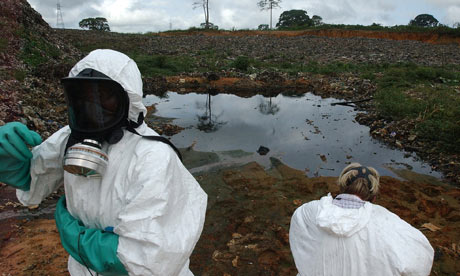
 The Guardian can reveal evidence today of a massive cover-up by the British oil trader Trafigura, in one of the worst pollution disasters in recent history.
Internal emails show that Trafigura, which yesterday suddenly announced an offer to pay compensation to 31,000 west African victims, was fully aware that its waste dumped in Ivory Coast was so toxic that it was banned in Europe.
How UK oil company Trafigura tried to cover up African pollution disaster
FBI chief vows to protect terror detainees from rendition
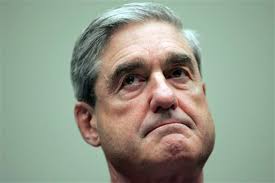 Signaling a shift in the U.S.'s handling of overseas interrogations, FBI director Robert Mueller reassured Democratic lawmakers Wednesday that his agents would never turn over detainees to the CIA for rendition, despite the bureau's heightened role in the questioning of terrorism detainees.
In creating a new interagency group that manages interrogations, the Obama administration has handed the FBI more control in the questioning of high-value detainees, a decision that's diminished the CIA's central role.
Color-blindness Cured by Gene Injection in Monkeys
 A simple injection of cells has cured monkeys of color-blindness—giving a green light to future research into improving human vision with gene therapy, a new study says.
Calling the procedure his gene therapy "dream," researcher Jay Neitz said that "ultimately this could be a tool that could cure all sorts of eye diseases."
Earth-like planet discovered outside solar system
 Astronomers have discovered an Earth-like planet outside the Solar System, 'shortening' the odds that alien life could exist. A new study of the planet, which orbits a star 500 light years away, has shown that its density is similar to Earth's, indicating it is a solid rocky world.
Known as COROT-7b, it was discovered in February this year by the European space telescope COROT, which had been tracking the star it circles.
THE INFLUENCE GAME: Health interests fund senators

In keeping with the ways of Washington and Capitol Hill, Baucus is enjoying this donor largesse — some $3.9 million in contributions from the health care industry since 1989 — principally because of his place as chairman of the Senate Finance Committee. It's the panel that has had as much or more to say than any about whatever kind of medical overhaul emerges from Congress.
Another lawsuit targets founder of Blackwater
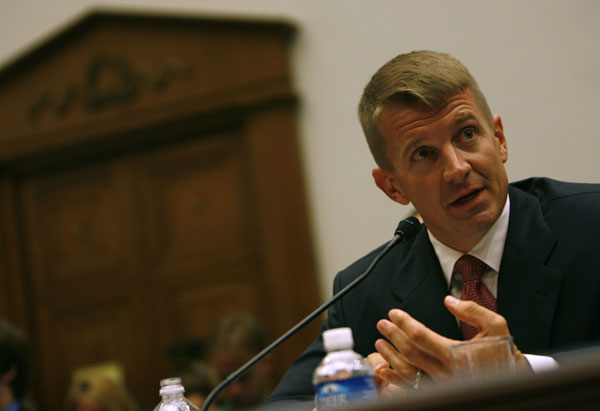 Yet another civil lawsuit accuses Blackwater guards of driving through the streets of Baghdad randomly shooting innocent Iraqis.
The latest case accuses Blackwater founder Erik Prince of personally directing murders from a 24-hour remote monitoring "war room" at the private military company's Moyock, N.C., headquarters.
Prince "personally directed and permitted a heavily-armed private army... to roam the streets of Baghdad killing innocent civilians," alleges the suit, filed by four Iraqi citizens.
Doctors warn on climate failure
 Failure to agree a new UN climate deal in December will bring a "global health catastrophe", say 18 of the world's professional medical organisations.
Writing in The Lancet and the British Medical Journal, they urge doctors to "take a lead" on the climate issue. In a separate editorial, the journals say that people in poor tropical nations will suffer the worst impacts.
Mafia 'sank nuclear waste ship'
 A shipwreck that could contain nuclear waste is being investigated by authorities in Italy amid claims that it was deliberately sunk by the mafia.
An informant told a judge the ship was one of a number he blew up as part of an illegal operation to bypass rules on the disposal of toxic waste.
The sunken vessel has been found 30km (18 miles) off the south-west of Italy. Murky pictures taken by a robot camera show the vessel intact and alongside it are a number of yellow barrels. Labels on them say the contents are toxic.
Anatomy of Injustice: The Unsolved Killings of Journalists in Russia
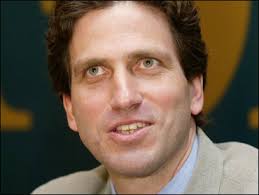 Only Iraq and Algeria outrank Russia on the list of most life-threatening countries for the press. Seventeen journalists have been murdered in Russia since 2000. In only one case have the killers been punished. This is a sorry record for a great and powerful nation that embarked on democratization after more than 70 years of brutal repression.
That is why the Committee to Protect Journalists is releasing an unprecedented report that calls on the international community to help reverse this slide toward lawlessness. Our mission is to protect journalists, and we are less and less able to do so in Russia.
Page 895 of 1167