Health Glance
 The state of Louisiana has reported 415 cases of health problems linked to the spill, with symptoms including sore throats, irritated eyes, respiratory tract infections, headaches and nausea.
But Bernard Goldstein, an environmental toxicologist and professor at the University of Pittsburgh, said the US government's method of collecting health data on the workers is flawed.
Mystery Illnesses Plague Louisiana Oil Spill Crews
Why Does FDA Tolerate More Radiation Than EPA?
 Since the Environmental Protection Agency began detecting radiation in rainwater and milk at levels above its maximum contaminant level, government officials have been downplaying the importance of EPA’s maximum contaminant level.
They would much prefer us to speak in terms of the Food and Drug Administration’s “Derived Intervention Level.”
The two levels could hardly be more different:
Armed agents kidnap child from mother who used holistic treatments instead of pharmaceutical drugs to treat condition
 Maryanne Godboldo of Detroit, Mich., recently learned the hard way that freedom of choice in medicine is no longer tolerated by the medical mafia in the supposed "land of the free." Recently, armed officers from the Special Response Team (SRT) of the Detroit Police Department (DPD), at the command of Child Protective Services (CPS), unlawfully kicked down the door of Godboldo's home and kidnapped her 13-year-old child. Her crime? Maryanne chose to follow the lead of a doctor's recommendation to take her daughter off a pharmaceutical drug treatment recommendation for psychosis that was worsening the child's symptoms, and instead chose to use natural remedies to treat the condition.
Some bacteria in grocery meat resistant to anti-biotics
 Researchers have found high levels of bacteria in meat commonly found on grocery store shelves, with more than half of the bacteria resistant to multiple types of antibiotics, according to a study released on Friday.
While the meat commonly found in grocery stores is still safe to eat, consumers should take precautions especially in handling and cooking, the chief researcher for the study said.
25 Shocking Facts That Prove That The Entire U.S. Health Care Industry Has Become One Giant Money Making Scam
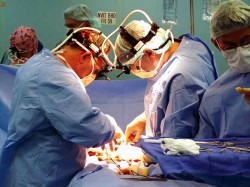 What is the appropriate word to use when you find out that the top executive at the third largest health insurance company in America raked in 68.7 million dollars in 2010? How is one supposed to respond when one learns that more than two dozen pharmaceutical companies make over a billion dollars in profits each year? Is it okay to get angry when you discover that over 90 percent of all hospital bills contain "gross overcharges"? Once upon a time, going into the medical profession was seen as a "noble" thing to do. But now the health care industry in the United States has become one giant money making scam and it is completely dominated by health insurance companies, pharmaceutical corporations, lawyers and corporate fatcats. In America today, just one trip to the hospital can cost you tens of thousands of dollars even if you do not stay for a single night. The sad thing is that the vast majority of the money that you pay out for medical care does not even go to your doctor. In fact, large numbers of doctors across the United States are going broke. Rather, it is the "system" that is soaking up almost all of the profits. We have a health care industry in the United States that is fundamentally broken and it needs to be rebuilt from the ground up.
Superbugs may have found their match in manuka bees
 Manuka honey, the premium product found on fashionable breakfast tables, could play a role in the battle against antibiotic-resistant superbugs, scientists reported yesterday.
Honey is known to have antiseptic properties but the antibacterial potency of manuka honey, from New Zealand, is 10 to 50 times more powerful. It has been shown to stop the growth of antibiotic-resistant Staphylococcus aureus – the superbug that causes MRSA.
Scientists create human kidneys from stem cells
 British scientists have created human kidneys from stem cells in a breakthrough which could result in transplant patients growing their own organs. The artificial organs were created in a laboratory using human amniotic fluid and animal foetal cells.
They are currently half a centimetre in length - the same size as kidneys found in an unborn baby. Scientists at Edinburgh University hope they will grow into full-size organs when transplanted into a human.
More Articles...
Page 114 of 236