



 The new vice-president of Egypt, Omar Suleiman, is a long-standing favourite of Israel's who spoke daily to the Tel Aviv government via a secret "hotline" to Cairo, leaked documents disclose. Mr Suleiman, who is widely tipped to take over from Hosni Mubarak as president, was named as Israel's preferred candidate for the job after discussions with American officials in 2008.
As a key figure working for Middle East peace, he once suggested that Israeli troops would be "welcome" to invade Egypt to stop weapons being smuggled to Hamas terrorists in neighbouring Gaza.
WikiLeaks: Israel's secret hotline to the man tipped to replace Mubarak
George Bush issued travel warning by human rights organisations
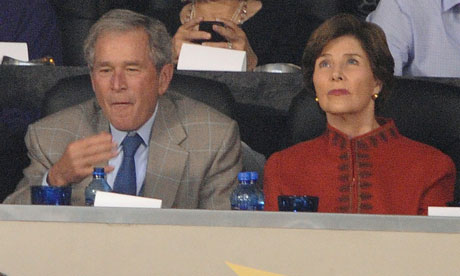 Human rights groups have vowed to track George W Bush round the world after their success in forcing him to cancel a trip to Switzerland amid concerns over protests and a threatened arrest warrant.
Katherine Gallagher, a lawyer with the New York-based Centre for Constitutional Rights, said: "The reach of the convention against torture is wide. This case is prepared and will be waiting for him wherever he travels next. "Torturers, even if they are former presidents of the United States, must be held to account and prosecuted."
Military deploys acupuncture to treat soldiers' concussions
 The U.S. military is applying an ancient Chinese healing technique to the top modern battlefield injury for American soldiers, with results that doctors here say are "off the charts." "Battlefield acupuncture," developed by Air Force physician Col. Richard Niemtzow, is helping heal soldiers with concussions so they can return more quickly to the front lines.
At Camp Leatherneck, an enormous Marine Corps base in southern Afghanistan's Helmand province, a military doctor's consulting room has dim little Christmas lights arranged across the ceiling and new age music playing.
NASA Images the Entire Sun, Far Side and All
 It might not seem obvious why anyone should care what's happening on the other side of the Sun. But NASA can explain: our home star is a seething, roiling ball of superhot gas that goes through cycles of relative quiet, punctuated by violent outbursts. Every so often, the Sun spits out a blob of charged subatomic particles — and occasionally, one of them is aimed directly at the Earth.
These eruptions, known as coronal mass ejections, aren't enough to hurt the planet physically; they're very hot, but also very insubstantial. What they can do is fry the electronics of communications satellites, and even put astronauts in danger of a radiation overdose.
American Football: Under-age sex trade booming at Super Bowl
 imps will traffic thousands of under-age prostitutes to Texas for today's Super Bowl, hoping to do business with men arriving for the big game with money to burn, child rights advocates said.
The country's largest sporting event, the game between the Green Bay Packers and the Pittsburgh Steelers will make the Dallas-Fort Worth area a magnet for business of all kinds, including the multimillion- dollar, under-age sex industry, said activists. Authorities are trying to combat the annual spike in trafficking of under-age girls that coincides with the game.
Documents show Army's disservice to broken soldiers
 The Army's special medical units should be healing more than 9,300 soldiers entrusted to their care. But a nine-month probe by the Tribune-Review found America's sick and injured soldiers must struggle to mend inside 38 Warrior Transition units the Army has turned into dumping grounds for criminals, malingerers and dope addicts.
Originally designed to treat the wounded from twin wars in Iraq and Afghanistan, after nearly a decade of battle these barracks snag soldiers in red tape. Despite an epidemic of post-traumatic stress disorder, depression, brain injuries and substance abuse linked to repeated combat deployments, soldiers sometimes spend years desperately seeking psychological care.
Jerusalem Post: Is Israeli democracy being hijacked?
 Sixty-three years after its founding, Israel is a young democracy still struggling for survival in a sea of autocracy. It also faces an unprecedented assault on its legitimacy. Yet instead of uniting to face the myriad threats from without, we find ourselves divided over equally serious threats from within.
Over the past several months, the Knesset has been inundated with a series of bills that threaten to rend the delicate fabric of our multicultural society and undermine the democratic character of our state. In parallel, some parts of the rabbinical establishment are attempting to assert a monopoly over the state’s Jewish values.
Ronald Reagan, Enabler of Atrocities
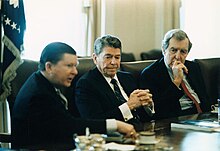 When you’re listening to the many tributes to President Ronald Reagan, often for his talent making Americans feel better about themselves, you might want to spend a minute thinking about the many atrocities in Latin America and elsewhere that Reagan aided, covered up or shrugged off in his inimitable "aw shucks" manner.
After all, the true measure of a president shouldn’t be his style or how he made us feel but rather what he did with his extraordinary power, what were the consequences for real people, either for good or ill.
The FBI Has Been Violating Your Liberties in Ways That May Shock You

Page 671 of 1167