Environmental Glance
 Chris and Stephanie Hallowich were sure drilling for natural gas near their Pennsylvania home was to blame for the headaches, burning eyes and sore throats they suffered after the work began.
The companies insisted hydraulic fracturing -- the technique they used to free underground gas -- wasn’t the cause. Nevertheless, in 2011, a year after the family sued, Range Resources Corp (RRC). and two other companies agreed to a $750,000 settlement. In order to collect, the Hallowiches promised not to tell anyone, according to court filings.
Drillers Silence Fracking Claims With Sealed Settlements
Erratic US 'weather whiplash' accounts for billions of dollars in global losses
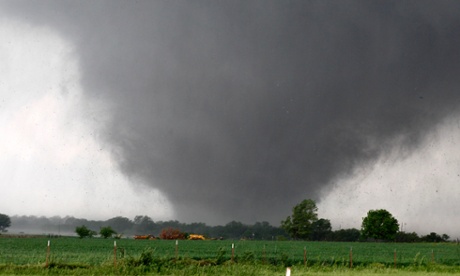 America has some of the wildest weather on the planet, and it turns out those extremes – which run from heat waves and tornadoes to floods, hurricanes and droughts – carry a heavy price tag.
Climate studies have associated more frequent and intense weather events – such as heavy storms and heat waves – with climate change. The wild swings in weather across the midwest over the last few years – including heat waves, floods, and drought – have been cited as an example of what lies ahead with future climate change.
Liability Bombshell: Must-Read Letters From PA and WI Fracking Victims to Illinois Lawmakers
The world is not just watching the unfolding fracking bill debacle at the Illinois state capitol.
As the Illinois General Assembly votes this week on the state's increasingly suspect fracking bill, residents affected by similar operations in Pennsylvania and frac sand mining in Wisconsin, Iowa and Minnesota took the extraordinary step today of releasing unprecedented letters warning of a "public health disaster" in the making, and called on Illinois lawmakers to set aside the flawed bill and "swiftly enact a moratorium."
Gas Industry Successfully Overturns Colorado Fracking Ban
 The townspeople in Fort Collins were greeted with some unfortunate news earlier this week, as their city council decided to overturn a ban on hydraulic fracturing that had been in place for only a few short months. The decision to overturn the ban was based solely on the threat of a lawsuit from the oil and gas industry.
The mere threat of a lawsuit from the only fracking company in town – Prospect Energy – was enough to send the city council cowering in submission, placing the entire town at risk of the negative health impacts associated with fracking.
Resistance in Ohio, Fracking's Dumping Ground
 The Ohio River valley is lush in the spring. The eastern Ohio River, one of America's most economically vital waterways, winds through the rolling green foothills of Appalachia as it ambles past small towns and cities in Ohio and West Virginia.
The valley has been heavily industrialized for decades. Coal-burning power plants, chemical processing facilities and mills dot the riverside. In 2012, the Ohio River was ranked the nation's most polluted waterway, according to government data compiled by Environment America. Elisa Young is determined to keep the river from getting worse.
Fracking the Suburbs: An Explosive Combination?
 As rural deposits of fossil fuel grow fewer and farther between, extractive industries are increasingly siting their operations over the next best location: suburban neighborhoods.
According to the U.S. Energy Information Agency, the Marcellus shale formation beneath parts of the Midwest and Appalachia contains literally trillions of cubic feet of natural gas—the most accessible of which often lies beneath residential neighborhoods.
Exposed: Lung Cancer Risks from Fracked Natural Gas in NYC Kitchens
 At a public forum last night, leading voices in politics, public health, the environment and workers’ rights analyzed the threat to New York City residents from increased radon levels that would be found in natural gas from new regional sources being promoted by Mayor Bloomberg. Radon, a dangerous substance found in natural gas that most New Yorkers cook with, is the leading cause of lung cancer in non-smokers.
At the forum, Assemblymember Linda Rosenthal presented legislation sponsored by she and State Senator Diane Savino that would protect the public from the risks of radon in natural gas.
More Articles...
Page 70 of 203