



Yahoo Inc last year secretly built a custom software program to search all of its customers' incoming emails for specific information provided by U.S. intelligence officials, according to people familiar with the matter.
The company complied with a classified U.S. government directive, scanning hundreds of millions of Yahoo Mail accounts at the behest of the National Security Agency or FBI, said two former employees and a third person apprised of the events.
Yahoo secretly scanned customer emails for U.S. intelligence - sources
Category 4 Matthew heads for Bahamas and South Florida; hurricane watch issued
 "Extremely dangerous" Category 4 Hurricane Matthew is moving north toward Cuba, the Bahamas and Florida, where the National Hurricane Center has issued a hurricane watch for much of the state's Atlantic coast.
Matthew made landfall near Les Anglais in western Haiti at 7 a.m. Tuesday with 145 mph winds and torrential rains. The National Hurricane Center says Matthew strengthened afterward with 150 mph winds with gusts up to 175 mph late Tuesday morning, making it the most powerful Atlantic storm since 2007.
California just passed the most inclusive transgender bathroom law yet

According to Mashable, California Governor Jerry Brown signed a bill last week that will make all public, single-user bathrooms “universally acceptable to all genders.”
The law will go into effect on March 1, 2017, and is a huge step forward in making bathrooms safe for transgender, gender non-conforming, and non-binary individuals.
Bombshell report on Trump taxes sends GOP nominee reeling
 It took less than a day for October to produce an "October surprise."
Donald Trump reported a nearly $1 billion loss on his 1995 tax returns and could therefore have avoided paying federal income taxes for almost two decades, the New York Times reported on Saturday, putting another unexpected exclamation point on what had already been one of the worst weeks for any presidential nominee in recent memory.
Texas activists who lost one pipeline fight set sights on ne
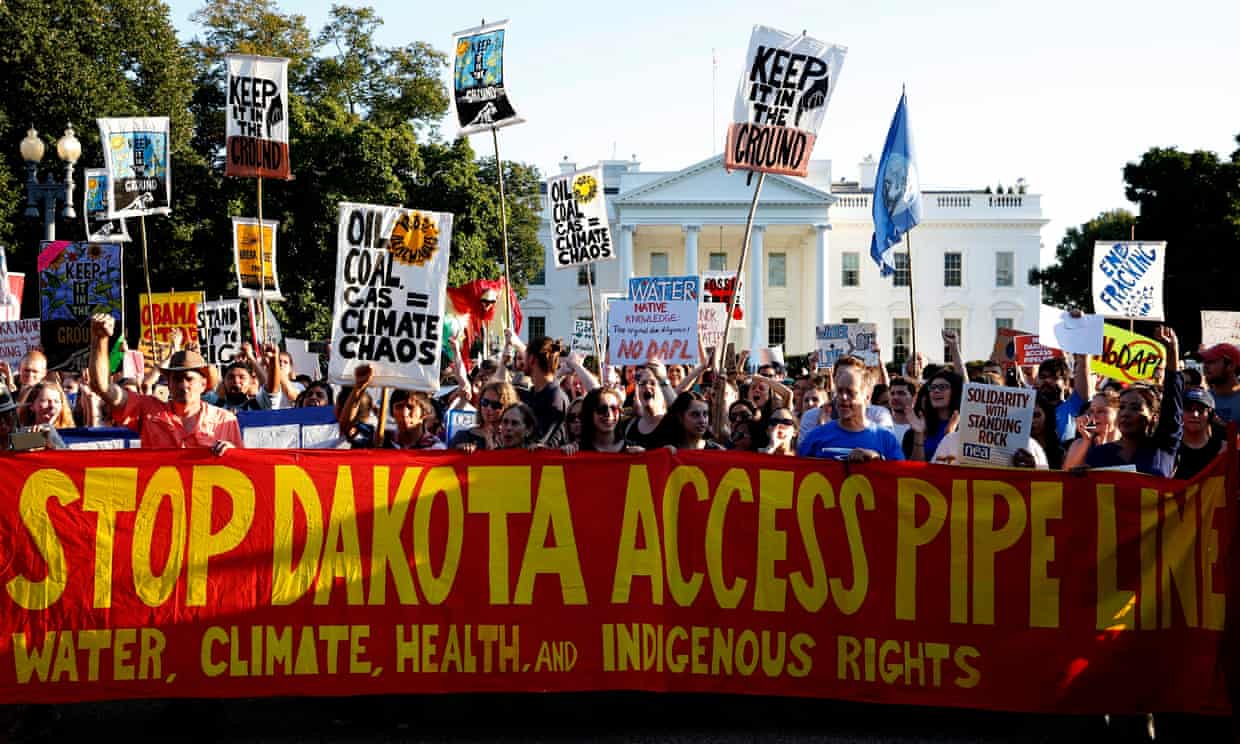
It looks to Lori Glover “like a long snake going across the whole desert”. For David Keller, it is “like having a very beautiful historic home and having someone run a bulldozer through the kitchen”. And in Yolonda Blue Horse’s view, it is another example of disrespect from an industry that does not care about native people.
Before the Dakota Access pipeline sparked continuing protests that led to national attention and an Obama administration intervention, a feisty group of activists in remote west Texas waged a long battle against the same company when it pressed ahead with plans to run a 143-mile natural gas pipeline to Mexico through some of the state’s most pristine countryside.
Barrel bombs hit largest hospital in Syria's Aleppo
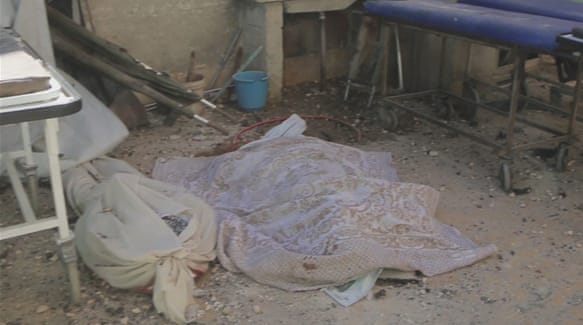 At least two barrel bombs have hit the largest hospital in the rebel-held eastern side of Syria's Aleppo city, according to the medical organisation that supports it.
The facility, known as M10, had already been hit by heavy bombardment on Wednesday along with the second-largest hospital in the area in what Ban Ki-moon, the UN secretary-general, denounced as "war crimes".
World Leaders Gather For The Burial Of Former Israeli Leader Shimon Peres
 Welcoming Abbas, as participants recorded the encounter on their cellphones, Netanyahu said of his attendance: “It’s something that I appreciate very much on behalf of our people and on behalf of us.”
But Abbas’s rare visit to the city, a short drive through Israeli military checkpoints from Ramallah, in the occupied West Bank, seemed unlikely to yield anything more than handshakes.
Rosetta Spacecraft Safely Lands on Comet

Some space missions go out with a bang, others with a victorious return to Earth, but Rosetta’s final moment was marked simply by radio silence.
Shortly after noon (BST) on Friday, the European Space Agency (ESA) spacecraft finally collided with the duck-shaped comet that it has been pursuing through space for twelve-and-a-half years, switched off its transmitters and hung up the phone to its controllers on Earth.
Wisconsin Is Systematically Failing to Provide the Photo IDs Required to Vote in November
Zack Moore, a 34-year-old African-American man, moved from Chicago to Madison last year. He worked at a car wash and then a landscaping job before breaking his leg and becoming unemployed. After staying with his brother, he’s now homeless and sleeping on the streets of Madison.
On September 22, he went to the DMV to get a photo ID for voting, as required by Wisconsin’s strict voter-ID law. He brought his Illinois photo ID, Social Security card, and a pay stub for proof of residence. But he didn’t have a copy of his birth certificate, which had been misplaced by his sister in Illinois, so the DMV wouldn’t give him an ID for voting. “I’m trying to get a Wisconsin ID so I can vote,” Moore told the DMV. “I don’t have my birth certificate, but I got everything else.”
More Articles...
Page 218 of 1189