


 Israel's Finance Minister Bezalel Smotrich has announced a new plan to judaise the Negev, or Naqab in Arabic, and the Galilee, vowing to replicate in Israel policies that he has pursued in the occupied West Bank.
"Today I am presenting to you the Religious Zionism plan for the judaisation of the Negev and Galilee," Smotrich said on X on Thursday.
The Negev and Galilee are in the southern and northern parts of Israel and are home to the majority of Palestinian citizens of Israel.
Smotrich said that the settlement expansion he has led in the West Bank in the past four years, would be repeated "on a massive scale" in the Negev and the Galilee as well.
"The goal: one million additional Jews in the Negev and Galilee, 40 new communities, dozens of farms, expansion of existing communities, and hundreds of thousands of housing solutions," he said.
 The universe is a strange place — filled with exploding stars, ancient galaxies, and unseen worlds. Now, astronomers are about to get a brand new tool to explore it.
 Football in the occupied West Bank has been brought to a near standstill since Israel launched its genocidal war on Gaza.
 Tennessee national guard members assigned to a federal anti-crime taskforce in Memphis fatally shot an armed 20-year-old man in the back, according to an autopsy report obtained by the Associated Press, contradicting police accounts that said the man was facing the troops when they fired.
 A new National Park Service report backs Donald Trump’s proposed arch, despite what it says are adverse effects to the sightlines of a host of landmarks in Washington, including the Washington Monument and the Lincoln and Jefferson memorials.
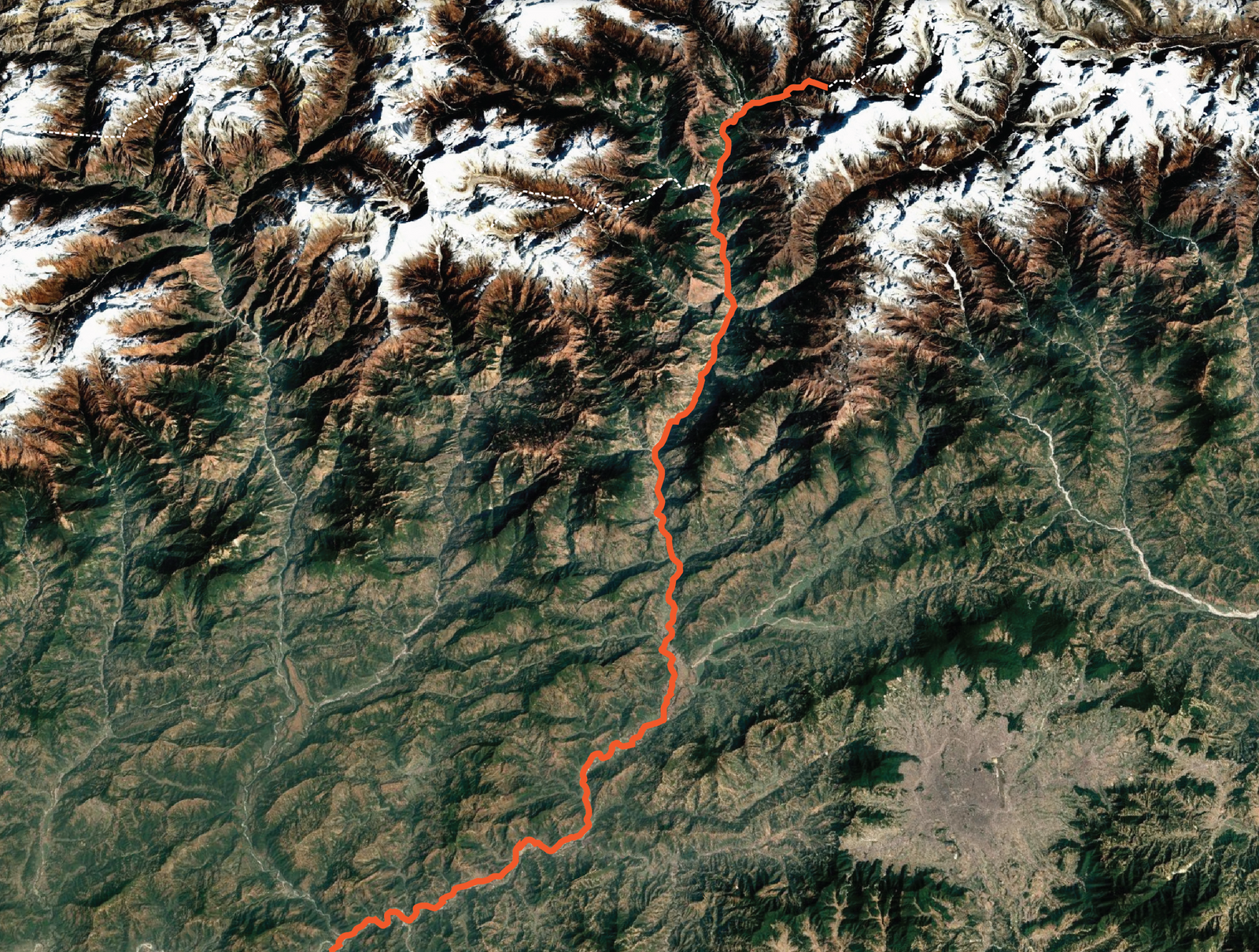 At least 359 people have died, and nearly 1,000 others are reported missing after a flash flood struck a mountainous area in Nepal and the Tibet region of China on Aug. 26.
 The Girl Scouts of the USA (GSUSA) came under fire online this week after being accused of "Islamising" its programmes.
 Israel's Diaspora Affairs Minister Amichai Chikli has explained his own strategy more candidly than any critic could.