War Glance
 As Americans mark the 10th anniversary of the invasion of Iraq, a majority said the country erred in sending troops there, a Gallup poll indicated.
Fifty-three percent of Americans said they believe the country "made a mistake sending troops to fight in Iraq" while 42 percent said it wasn't, poll results released Monday indicated. Gallup said it was the first time it asked this question since U.S. troops pulled out in December 2011.
Poll: Majority says Iraq invasion mistake
U.S. pledge to help Iraqis who aided occupation largely unfulfilled
 Ten years after the United States’ invasion that toppled Saddam Hussein and set off a sectarian war that continues to this day, thousands of Iraqis are eligible for resettlement to the U.S. because they risked their lives to help the war effort as interpreters, cultural advisers and other support staff.
But of the legislated allotment of about 25,000 “special immigrant visas” – which offer permanent residency as a reward to Iraqis who worked with the U.S. government – just 4,669 cases have been approved since 2008, and the program is scheduled to end in September.
5 U.S. troops die in helicopter crash in Afghanistan
 A helicopter crash in southern Afghanistan has killed five American service members, officials said Tuesday.
Monday night's crash brought the total number of U.S. troops killed that day to seven, making it the deadliest day for U.S. forces so far this year. Two U.S. special operations forces were gunned down hours earlier in an insider attack by an Afghan policeman in eastern Afghanistan.
10 companies profiting the most from war
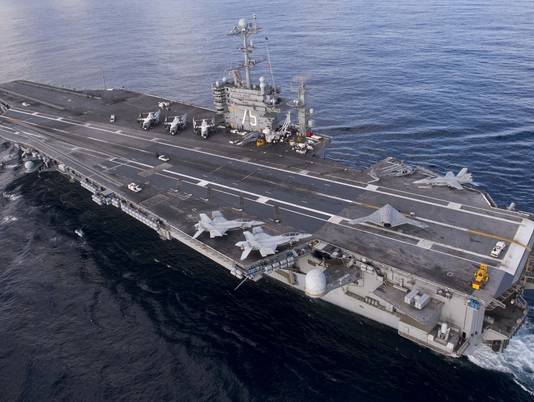 The business of war is profitable. In 2011, the 100 largest contractors sold $410 billion in arms and military services. Just 10 of those companies sold over $208 billion. Based on a list of the top 100 arms-producing and military services companies in 2011 compiled by the Stockholm International Peace Research Institute (SIPRI), 24/7 Wall St. reviewed the 10 companies with the most military sales worldwide.
These companies have benefited tremendously from the growth in military spending in the U.S., which by far has the largest military budget in the world. In 2000, the U.S. defense budget was approximately $312 billion. By 2011, the figure had grown to $712 billion. Arm sales grew alongside general defense spending growth. SIPRI noted that between 2002 and 2011, arms sales among the top 100 companies grew by 51%.
The Worst Mistake in U.S. History -- America Will Never Recover from Bush's Great Foreign Policy Disaster
 Ten years ago, George Bush made a decision that this country will regret for a very long time.
I was there. And “there” was nowhere. And nowhere was the place to be if you wanted to see the signs of end times for the American Empire up close. It was the place to be if you wanted to see the madness -- and oh yes, it was madness -- not filtered through a complacent and sleepy media that made Washington’s war policy seem, if not sensible, at least sane and serious enough. I stood at Ground Zero of what was intended to be the new centerpiece for a Pax Americana in the Greater Middle East.
Too much money spent in Iraq for too few results
 Ten years and $60 billion in American taxpayer funds later, Iraq is still so unstable and broken that even its leaders question whether U.S. efforts to rebuild the war-torn nation were worth the cost.
In his final report to Congress, Special Inspector General for Iraq Reconstruction Stuart Bowen's conclusion was all too clear: Since the invasion a decade ago this month, the U.S. has spent too much money in Iraq for too few results.
NATO says its troops shot dead two Afghan boys
 NATO said on Saturday its forces had accidentally shot dead two Afghan boys, in the latest of a series of reports of civilian deaths at the hands of international troops.
The shooting in the southern province of Uruzgan could further strain the relationship between the NATO-led International Security Assistance Force (ISAF) and Afghan President Hamid Karzai, who has demanded U.S. special forces leave another province over allegations of torture.
More Articles...
Page 17 of 121