Special Interest Glance
For the NSA, the task was easy. The agency had already obtained technical information about the cellphone carriers’ internal systems by spying on documents sent among company employees, and these details would provide the perfect blueprint to help the military break into the networks.
The NSA’s assistance in the Libya operation, however, was not an isolated case. It was part of a much larger surveillance program—global in its scope and ramifications—targeted not just at hostile countries.
How the NSA Hacks Cellphone Networks Worldwide
Rights groups release software to detect government spyware
 Human rights group Amnesty International released free software on Thursday that allows users to determine if their computers are bugged by government intelligence agencies.
The program, Detekt, was designed specifically for human rights activists and journalists, whose computers governments regularly target, Amnesty said.
“Governments are increasingly using dangerous and sophisticated technology that allows them to read activists and journalists’ private emails and remotely turn on their computer’s camera or microphone to secretly record their activities,” said Marek Marczynski of Amnesty International.
Jehovah's Witnesses ordered to pay $13.5m to victim of sexual abuse
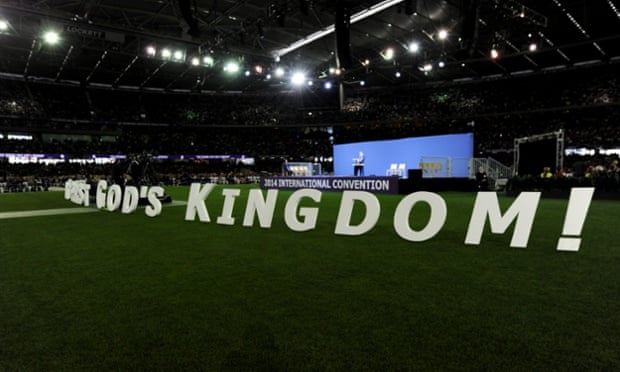 A Californian judge has ordered the Jehovah’s Witnesses to pay $13.5m to a man who was sexually abused in the 1980s by a church leader, the attorney for the victim said on Friday.
Church elders had assigned a man to work with Jose Lopez on Bible studies, even though they knew he had admitted to molesting another boy in 1982, because they felt he was “repentant”, Lopez’s attorney, Irwin Zalkin, said.
New York scientists unveil 'invisibility cloak' to rival Harry Potter's
Watch out Harry Potter, you are not the only wizard with an invisibility cloak.
Scientists at the University of Rochester have discovered a way to hide large objects from sight using inexpensive and readily available lenses, a technology that seems to have sprung from the pages of J.K. Rowling's Harry Potter fantasy series.
Cloaking is the process by which an object becomes hidden from view, while everything else around the cloaked object appears undisturbed.
"A lot of people have worked on a lot of different aspects of optical cloaking for years," John Howell, a professor of physics at the upstate New York school, said on Friday.
Warren Commission Experts To Reveal Secrets of JFK Murder, Cover-up at Sept. 26-28 DC Conference
Washington, DC — Forty-four prominent authors, medical doctors, academics, lawyers and other research experts convene from Sept. 26 to 28 to reveal recent findings undercutting the Warren Commission’s 1964 report ascribing President Kennedy’s murder to a sole assassin.
On the unique, historic occasion of the Warren report’s 50th anniversary, experts and surviving witnesses will examine evidence showing the commission was wrong about its core finding, that Lee Harvey Oswald acted alone in killing the president with three shots from behind. Polls for decades have shown that most Americans – sometimes more than 70 percent – disbelieve the commission, which was chaired by the late Supreme Court Chief Justice Earl Warren.
“Few serious scholars believe the Warren Report any longer,” said Assassinations Archives and Record Center President James Lesar, whose non-profit group AARC has organized what he called, “one of the most important JFK assassination conferences in history.”
Panera: Please don't bring your guns into our restaurants
 Panera Bread is joining other restaurants in asking its customers not to bring their guns into their casual dining locations, said the company Monday.
"The request is simply we recognize everyone's rights," said Panera CEO Ron Shaich. "But we also recognize that we are building communities in our cafes and are where people come to catch a breath."
Israel to build 283 homes on West Bank
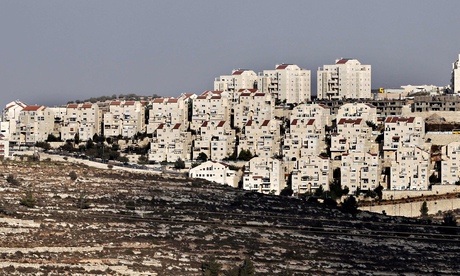 has published tenders to build 283 homes in a West Bank settlement, days after announcing its biggest land grab on occupied Palestinian territory for three decades.
The expansion of the Elkana settlement, in the north-west of the West Bank, was approved in January and the tenders were published on Thursday, Israel's land authority said.
It came after Israel announced its biggest land grab in the West Bank since the 1980s, saying it planned to expropriate 400 hectares (988 acres) of land in the south of the territory, between Bethlehem and Hebron.
More...
More Articles...
Page 35 of 176