Journalism Glance
 Major U.S. news organizations, including the New York Times and the Washington Post, are engaged in a replay of the kind of slanted coverage that paved the way to war in Iraq, only this time regarding Iran.
The treatment of Iran’s election last June, the depictions of President Mahmoud Ahmadinejad and the alarm over Iran’s nuclear program all parallel the one-sided coverage that the U.S. news media directed toward Iraqi Saddam Hussein and Iraq’s alleged WMD program before the U.S.-led invasion in 2003.
In both cases, the leading U.S. news outlets took sides; they cast developments in the “enemy” Muslim nation in the harshest possible light; they treated the leaders as unrelentingly evil; they exaggerated the threats (and potential threats) posed by the country’s weaponry, real and imagined.
U.S. media replays Iraq fiasco on Iran
Americans Prefer Online News After TV, Report Find
 New insight into how Americans get news shows most of us are not loyal to one news organization and consume information from a myriad of platforms, be it TV, the Internet, local newspapers, radio, and national newspapers. According to the authors of the study, Pew Research Center's Pew Internet & American Life Project, the Internet is now the third most popular news platform, behind local television news and national television news.
"People use their social networks and social networking technology to filter, assess, and react to news," the Pew report says. A full 75 percent of online news consumers get news stories delivered via e-mail or social networking, and 52 percent of those people will share news stories with others online.
Leaked ACTA draft reveals plans for internet clampdown
 The US, Europe and other countries including New Zealand are secretly drawing up rules designed to crack down on copyright abuse on the internet, in part by making ISPs liable for illegal content, according to a copy of part of the confidential draft agreement that was seen by the IDG News Service.
Cuba's aid to Haiti ignored by the media
 "It is striking that there has been virtually no mention in the media of the fact that Cuba had several hundred health personnel on the ground before any other country," said David Sanders, a professor of public health from Western Cape University in South Africa.
The Cuban team coordinator in Haiti, Dr Carlos Alberto Garcia, says the Cuban doctors, nurses and other health personnel have been working non-stop, day and night, with operating rooms open 18 hours a day.
The Lobbying-Media Complex
 While lobbyists and PR flacks have long tried to spin the press, the launch of Fox News and MSNBC in 1996 and the Clinton impeachment saga that followed helped create the caldron of twenty-four-hour political analysis that so many influence peddlers call home.
Since then, guests with serious conflicts of interest have popped up with alarming regularity on every network. Just examine their presence in coverage of the economic crash and the healthcare reform debate, two recent issues that have engendered massive cable coverage.
Iceland may become investigative haven for journalists
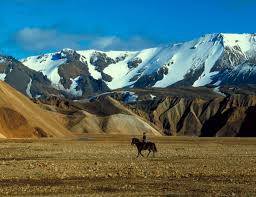 Wikileaks hopes to convert Iceland into a friendly home for investigative journalists with laws friendly to whistleblowers, its editor says.
Julian Assange, editor of Wikileaks, told the BBC the Icelandic Modern Media Initiative has been working with members of the Icelandic Parliament to bring together the most favorable laws from around the world.
D-Day at CBS News
 Word of the layoffs had first surfaced the previous Friday afternoon in the L.A. Times. Over the weekend, CBS staffers vacillated between acceptance of the situation and cautious optimism. Maybe it wouldn’t be as bad as reported? After all, the company was already lean. Where would top brass find 100 or so people to let go? Perhaps there was some stash of employees hidden on the digital side, some long-forgotten deal between, say, 60 Minutes and Yahoo, that would provide some bodies to lessen the blow?
More Articles...
Page 67 of 104