Environmental Glance
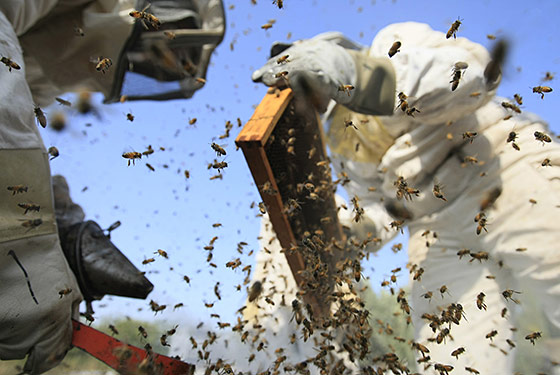 Yesterday's New York Times featured a heartwarming ending to the years-long murder mystery of what was causing Colony Collapse Disorder (CCD) among honeybees. Experts suspected pesticides or genetically modified foods, but the article reported that the University of Montana's Bee Alert Team, working alongside the Army, found the cause: the combined effects of a virus and fungus. Data sharing! Chance discoveries! Honeybees live on to sting another day! But according to Fortune, there were a couple of details left out of the front-page story. The team's lead investigator, Dr. Jerry Bromenshenk, may have previously dropped out of testifying in a class-action lawsuit after he received a significant research grant from the pharmaceutical giant Bayer. For years, beekeepers have tried to pursue legal action against Bayer Crop Science over their pesticides, in particular a type of neurotoxin that gets rids of insects by attacking their nervous systems. The beekeepers allege that the pesticides disoriented and killed their hives. One of the markers of CCD is a bee's tendency to fly off in a random direction before it dies.
 In parts of eastern Kentucky, the pictures coming out of Hungary of the red sludge that roared from a factory's reservoir, downstream into the Danube River, are all too reminiscent of what happened a decade ago this week.
 British scientific experts have made a major breakthrough in the fight to save the natural world from destruction, leading to an international effort to safeguard a global system worth at least $5 trillion a year to mankind.
 Bottled water has been falling out of public favor for years now, once people began to realize just how detrimental all those plastic bottles are to the environment – and what a rip-off bottled water often is in terms of price and purity.
 Interior Secretary Ken Salazar on Thursday unveiled new regulations aimed at reshaping the nation's offshore drilling industry in the wake of the BP oil spill.
 About 80% of the world's population lives in areas where the fresh water supply is not secure, according to a new global analysis.
 One-fifth of the world's plants - the foundation of life on Earth - are at risk of extinction, a study concludes. Researchers have sampled almost 4,000 species, and conclude that 22% should be classified as "threatened" - the same alarming rate as for mammals.