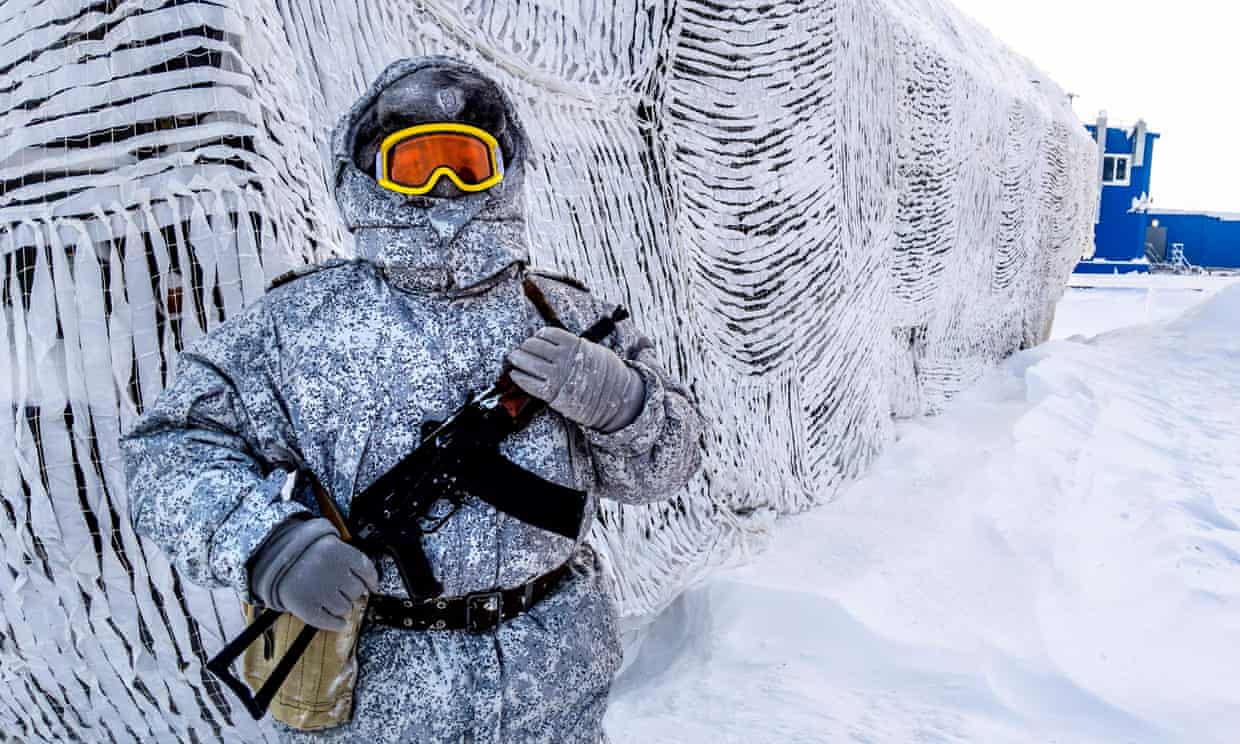
 Ask Britain’s foreign secretary which part of the world poses his biggest foreign policy challenge, and the chances are he will say either Russia or China. He probably will not say the Arctic. Yet the implications of what is happening in the Arctic will change patterns of international trade, drive food insecurity, deepen global poverty, increase refugee crises, reorient military alliances, and turbocharge military expenditures and the risk of war.
The eight Arctic states – Canada, Finland, Denmark, Iceland, Norway, Sweden, the US and Russia – have long collaborated on scientific research through the Arctic Council, a non-military body. Until now. After Russia’s invasion of Ukraine, Arctic Council meetings ceased. So did cooperation with Russia. This has hampered progress on climate and environmental research and turbocharged the militarisation of the Arctic.
The success of the Arctic Council depended on its geopolitical balance. It is not a security alliance and has always tried to remain independent from politics. Five of the eight countries were part of Nato; the other three were not. That has now changed. Finland joined Nato in April. Sweden is in the process of joining. Soon, Nato will literally be surrounding Russia in the Arctic.
 New York City’s top watchdog agency has hired a team of lawyers to investigate exactly what...
 Earth cooked to its hottest month on record in August, blowing far past a key climate...