
 It took Omar Qalib more than a decade to finish his family’s three-story house in Jouret al-Dahab, a neighborhood in the heart of the Jenin refugee camp. A construction worker, he built it himself, brick by brick. But it was worth it, he thought. The property fell within Area A, a zone within the occupied West Bank where the Palestinian Authority nominally controls both civil and security affairs.
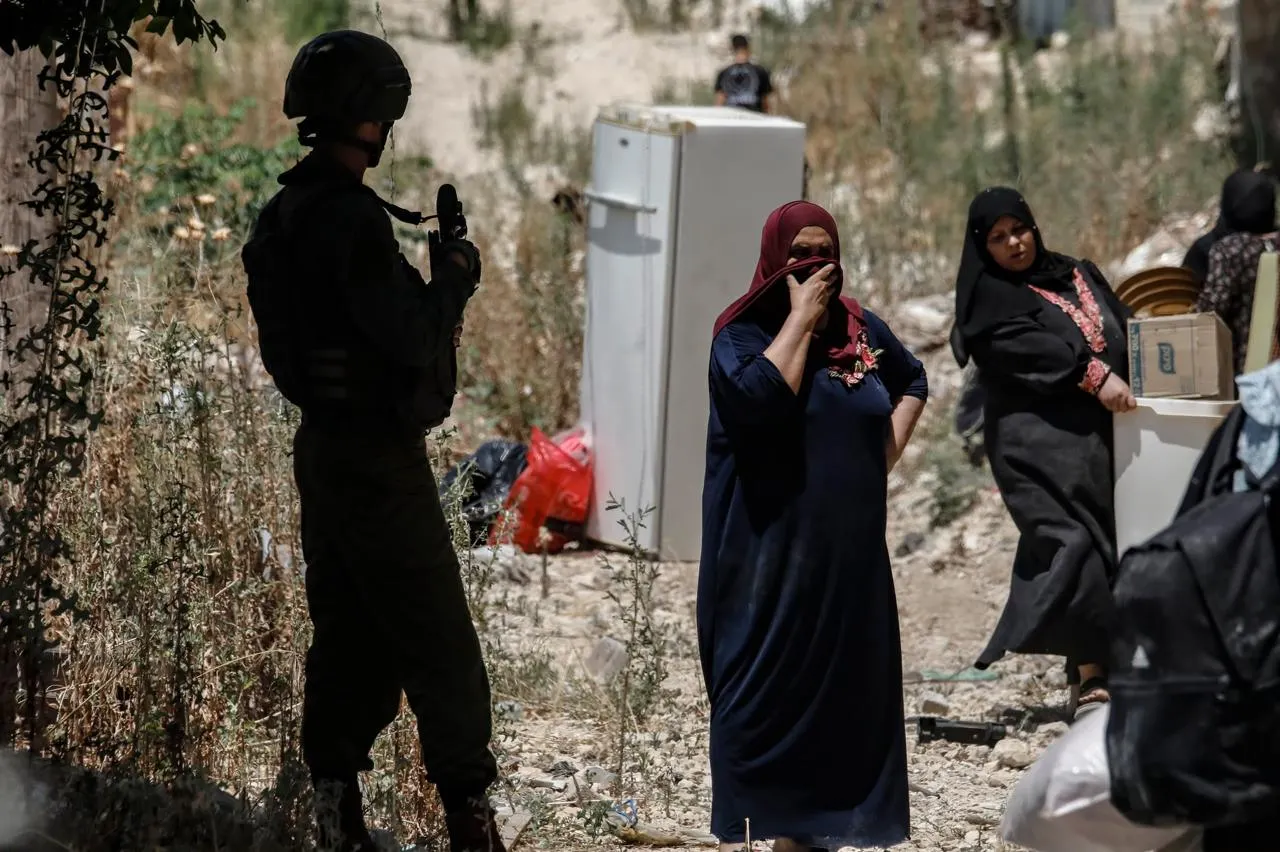
But in January 2025, Qalib was forced from his home, along with tens of thousands of other Palestinians, as Israel launched a large-scale military operation dubbed “Iron Wall” targeting refugee camps in Jenin, Tulkarm, and Nur Shams. More than 30,000 Palestinians were forced from their homes over the ensuing months, in the largest displacement of Palestinians in the West Bank in a single operation since the 1967 war.
After invading and occupying the camps in February 2025, the Israeli military campaign flattened entire neighborhoods, turning them into wastelands. Where narrow alleys once ran between tall buildings so close they blocked the light, wide dirt roads now cut through the heart of the camps, carved out by Israeli military bulldozers.
As part of the campaign, the camps have been cordoned off. Just to see what’s left of his home, Qalib needs a permit from the Israeli military. Few Palestinians are able to obtain them. And the permits only grant one-time, temporary access. Two weeks ago, Qalib was one of the lucky few who obtained a permit to visit his destroyed home.