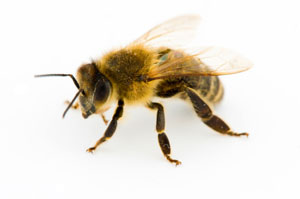
 Nanoparticles containing bee venom toxin melittin can destroy human immunodeficiency virus (HIV) while at the same time leaving surrounding cells unharmed, scientists from Washington University School of Medicine reported in the March 2013 issue of Antiviral Therapy.
The researchers said that their finding is a major step toward creating a vaginal gel that can prevent HIV spread. HIV is the virus that causes AIDS.
Joshua L. Hood, MD, PhD, a research instructor in medicine, said: "Our hope is that in places where HIV is running rampant, people could use this gel as a preventive measure to stop the initial infection."
Melittin is a powerful toxin found in bee venom. It can poke holes in the protective viral envelope that surrounds the human immunodeficiency virus, as well as other viruses. Free melittin in large-enough quantities can cause considerable damage.
Senior author, Samuel A. Wickline, MD, the J. Russell Hornsby Professor of Biomedical Sciences, has demonstrated that nanoparticles loaded with melittin have anti-cancer properties and have the capacity to kill tumor cells. Linking bee venom with anticancer therapies is not new, in 2004 Croatian scientists reported in the Journal of the Science of Food and Agriculture that honey-bee products, including venom, could well have applications in cancer treatment and prevention.
 After recently gaining recognition as the first professional Santa Claus with Down syndrome in the US,...
 As a new NFL season begins this Wednesday, the danger of America’s most-watched sport has never...