
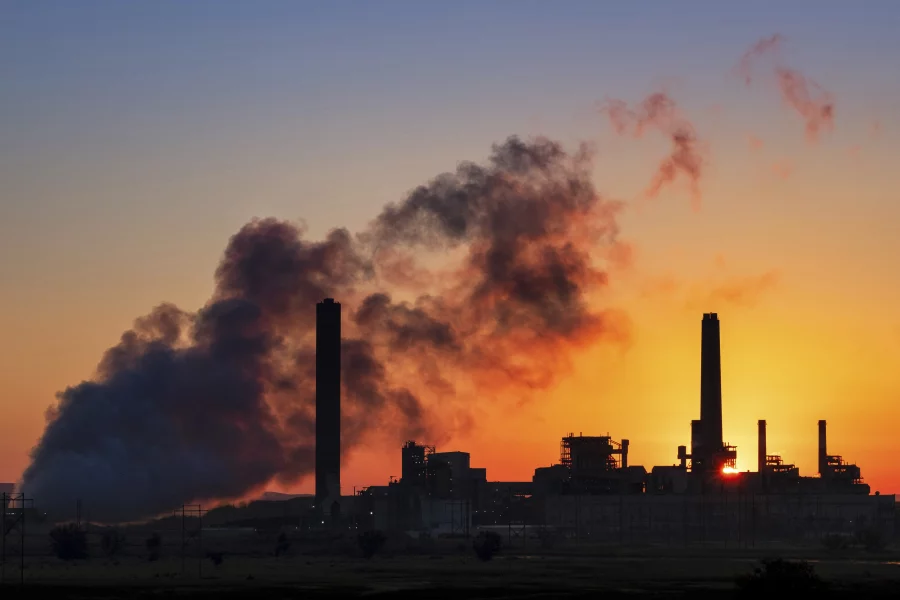
 For years, the Environmental Protection Agency has assigned a dollar value to the lives saved and the health problems avoided through many of its environmental regulations.
Now, that has changed. The EPA will no longer consider the economic cost of harm to human health from fine particles and ozone, two air pollutants that are known to affect human health. The change was written into a new rule recently published by the agency. It weakened air pollution rules on power plant turbines that burn fossil fuels, which are sources of air pollution of many types, including from fine particles, sometimes called soot.
The EPA writes in its regulatory impact analysis for the new rule that, for now, the agency will not consider the dollar value of health benefits from its regulations on fine particles and ozone because there is too much uncertainty in estimates of those economic impacts.
EPA press secretary Brigit Hirsch clarified that the agency is still considering health benefits. But it will not assign a dollar amount to those benefits until further notice, as it reconsiders the way it assesses those numbers.